
Green Air Duct Club · San Antonio Since 2009
San Antonio Air Duct Cleaning — What NADCA Standards Actually Require
Professional duct cleaning means debris leaves the building — not just moves around inside it.
We perform NADCA source-removal cleaning for homes across San Antonio: a high-powered vacuum creates negative pressure inside the duct system, loosened debris travels to a collection device, and it gets extracted — not redistributed through your home. Rated 4.8★ across 283 Google reviews.
- NADCA Source-Removal
- Camera Before & After
- Available 24/7
The Real Standard
What Legitimate Air Duct Cleaning Actually Involves
NADCA — the National Air Duct Cleaners Association — defines the ACR standard for professional cleaning, and it requires source-removal methodology. A high-powered vacuum creates negative air pressure inside the ducts; loosened debris travels toward a collection device and gets extracted. It doesn’t redistribute through your home during the process. That distinction matters: “cleaning” is a specific mechanical outcome — not just a visit with equipment.
Why It Builds Up
Why San Antonio Homes Load Up With Duct Contamination
San Antonio’s climate pushes duct contamination harder than almost any other U.S. market.
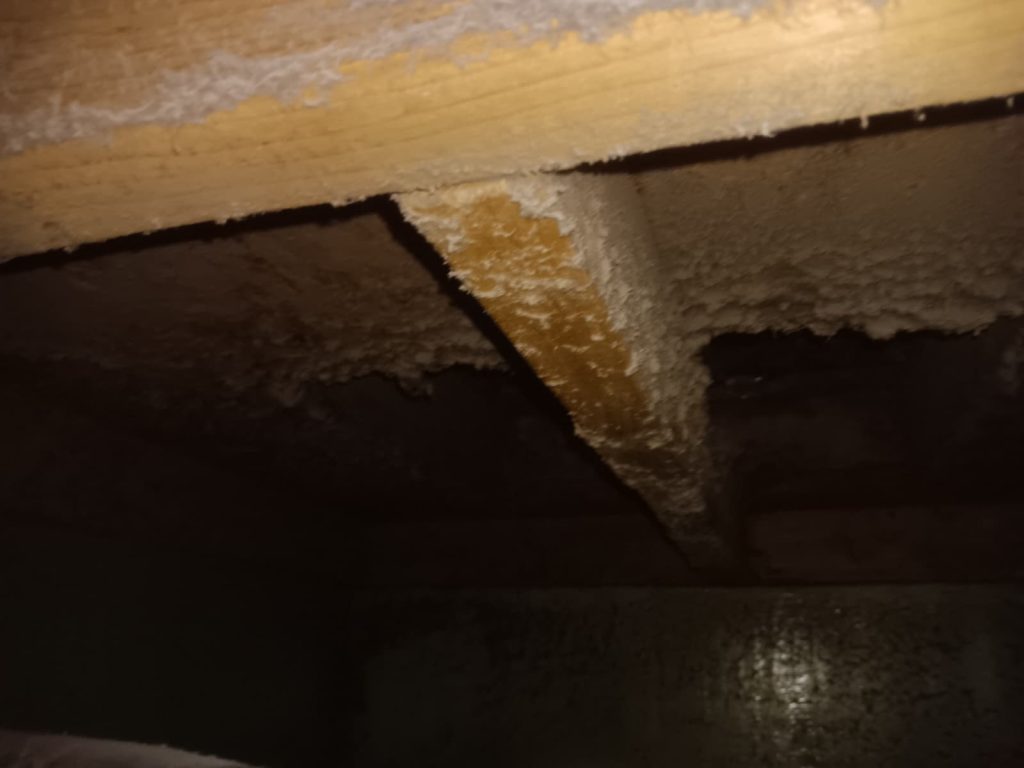
Most cities run AC four to six months a year. San Antonio runs it eight to ten. Every cycle pulls air across your filter and through your duct liner — carrying whatever is in the outdoor air. Limestone and caliche dust go airborne in dry spells. Ashe juniper (mountain cedar) releases pollen from December through February at some of the highest concentrations recorded in the U.S. Standard one-inch filters don’t capture cedar pollen at the size it travels — it passes through and coats the liner.
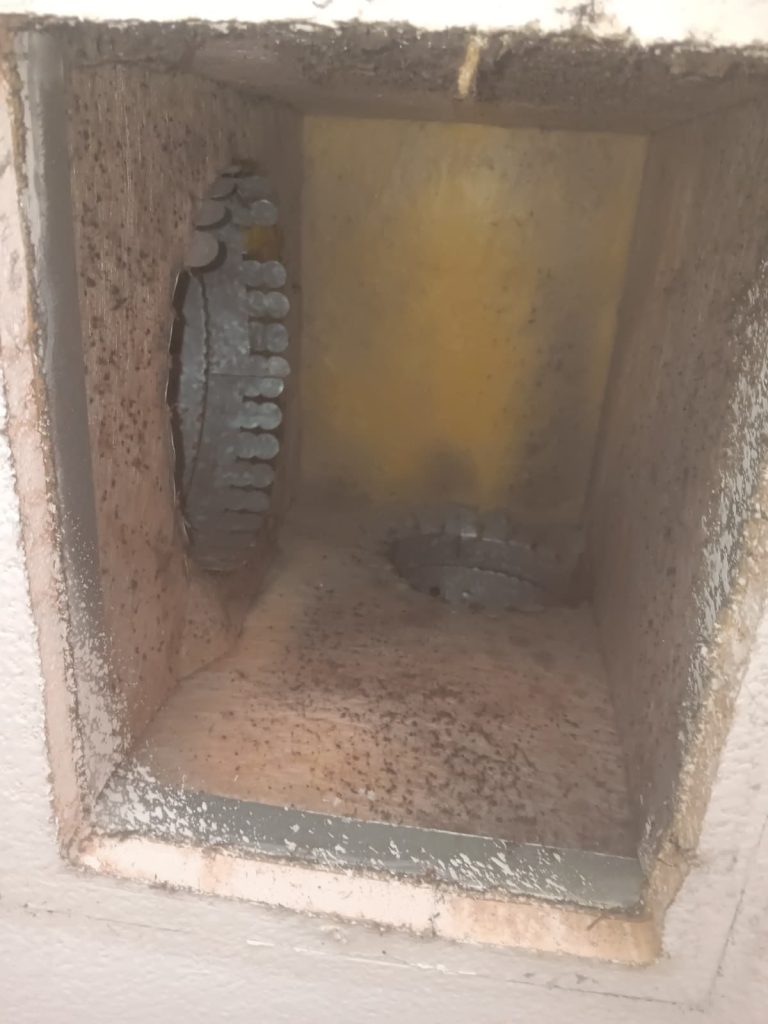
A duct system can look clean at the register face and still have compacted debris coating the inner liner ten feet in — recirculating with every cooling cycle, invisible from the living room, documented on inspection.
From The Field · Ori Tarzi, Founder
What a San Antonio Duct Cleaning Job Actually Looks Like
“The systems that surprise people most aren’t in old homes — they’re in late-1990s houses that look modern and feel maintained, where nobody has cleaned the ducts in fifteen or twenty years because the system keeps running and the filter gets changed on schedule.
I ran a cleaning last spring in Stone Oak — three-bedroom, single story, newer flex duct. She changed her filter every sixty days and had noticed more surface dust. We ran the camera first. Ten to twelve feet into the supply runs was packed gray material: cedar pollen, limestone particulate, and biological debris compressed against the liner over years of continuous operation. The filter caught a percentage. The rest got through.
We set the negative air machine at the main trunk, sealed the registers we weren’t working, and ran agitation through each branch. The collection bag told the story. What came out had no business going back into a breathing environment. That’s what source-removal is designed to do — not redistribute. Extract.”
Ori Tarzi
Founder, Green Air Duct Club
Honest Scope
What Source-Removal Cleaning Does — and What It Doesn’t
Source-removal cleaning extracts debris from duct interiors — it’s not a guarantee against future accumulation.
What Source-Removal Cleaning Does
- Removes the debris currently coating your duct liner walls.
- Restores airflow to the duct’s designed capacity.
- Reduces the particulate load recirculating through your living space each cooling cycle.
What it does not do: it doesn’t seal duct leaks, repair collapsed sections, or improve your filter’s ability to capture next season’s load — those are separate services. Cleaning isn’t permanent either; San Antonio’s dust and pollen mean contamination returns over time, at a rate set by filter quality and change frequency. We run a before-and-after camera comparison so you see the condition going in and confirm the result when the job is done.
How We Clean
Our Duct Cleaning Standards
Every residential job we run in San Antonio follows the same documented process.
Source-Removal Only
Negative air pressure at the system level. Debris is captured at a collection device, never redistributed through the home.
Camera Before & After
We document what we find and what we remove with a camera pass at the start and finish. You see both.
Agitation Matched to Duct Type
Flexible liner needs different tool contact than sheet metal — we don’t run one tool through every system.
All Branches Covered
Every supply and return branch is worked. We don’t clean a portion of the system and call it complete.
Registers Removed & Cleaned
Registers come off, boot interiors are cleaned to accessible depth, and covers go back flush.
Machine Sized to the Home
A truck-mounted unit generating the CFM level the system volume actually requires.
Start To Finish
How We Run a Duct Cleaning Job in San Antonio
The cleaning process follows a specific sequence — and the sequence matters.
01
Diagnostics First
We inspect before connecting equipment — a camera run through representative supply and return branches to document debris depth, liner integrity, and any damage at joints. If something affects the scope (a collapsed section, significant biological presence), we tell you before work starts.
02
Cleaning by Zone
The negative air machine connects to the main trunk; unworked registers are sealed. We run agitation through each branch — supply first, return after — from the farthest points back toward the air handler, until the camera confirms the liner wall is clear. The blower compartment gets attention separately.
03
Confirmation Before We Leave
A post-cleaning camera pass through the same documented sections, side by side with the before. Registers are reinstalled and the system is run to confirm airflow. Anything inconsistent — a weak register, a section needing a second pass — is handled before we leave.
Neighborhoods We Clean
Residential Duct Cleaning Across the San Antonio Metro
We serve homes from Helotes and Leon Springs in the northwest to Converse and Schertz in the northeast, and from Stone Oak and the 1604 corridor south through the urban core to the South Side. If your home is in Bexar County or a surrounding community, call to confirm availability for your address. Scheduling is available 24/7.
Bexar County & Surrounding Communities
- Helotes
- Leon Springs
- Stone Oak
- 1604 Corridor
- Converse
- Schertz
- Alamo Heights
- Leon Valley
- Northwest Side
- South Side
- Southtown
- US-281 Corridor
Available 24/7
Schedule Your San Antonio Duct Cleaning
We’ve performed source-removal duct cleaning in San Antonio since 2009 — 4.8★ across 283 Google reviews. We’ll confirm the scope before we arrive — home size, duct count, system configuration — so the job is planned around your specific system. Booking is available around the clock.
Prefer email? Reach us at greenairductclubusa@gmail.com. Available 24/7 across the metro.
Common Questions
Air Duct Cleaning in San Antonio: FAQ
Most San Antonio homes benefit from cleaning every three to five years. Homes with pets, allergy sufferers, or older flex duct in attics that exceed 140°F in summer may warrant every three years. Cedar season (December through February) deposits pollen inside liners faster than most expect, so the months after peak cedar season are a practical time to assess.
A typical single-story home with eight to twelve supply registers takes two to three hours, from camera inspection through post-cleaning confirmation. Two-story homes or high register counts run three to four hours. We give a time estimate when we confirm the scope before arriving.
Most homeowners notice reduced surface dust within a few weeks of a completed source-removal cleaning, most so when the liner had significant compacted debris beforehand. If dust returns quickly, that usually points to a filter quality or replacement-frequency issue to address alongside the clean ducts.
Yes. The blower compartment and accessible air handler cabinet surfaces are included in every job. Coil cleaning is a separate service — it needs different access and chemistry — but we inspect the coil visually and flag its condition so you have the full picture.
Cleaning removes physical debris using source-removal methodology. Sanitizing applies an EPA-registered antimicrobial to duct surfaces after cleaning to address biological presence. NADCA requires cleaning be completed before any sanitizing — sanitizing a dirty duct is not a substitute. We offer it as an add-on when inspection confirms it’s warranted, not as a default upsell.
Routine cleaning generally isn’t covered by standard policies. But if contamination resulted from a covered event — water intrusion from a burst pipe or fire damage — the cleaning may be part of a covered remediation claim. We can document conditions found during inspection to support an insurance inquiry.